Mobile app maintenance for business operations

Care for the app
your business
relies on.

Keep bookings, customer journeys and staff workflows in the maintenance plan. Clear priorities, agreed releases and a fixed monthly fee.

One-off audit. No monthly subscription. Ask about your app first if you are unsure.

Ask on WhatsApp

App Audit: USD $500 once, subject to eligibility.
Prefer to talk first? The enquiry is free.

1–2 hoursEnquiry reply target, during support hours

24–48 hoursAssessment target, once access is ready

Support: Monday–Friday, 9am–6pm UK time and 9am–6pm US Eastern time. No 24/7 cover.

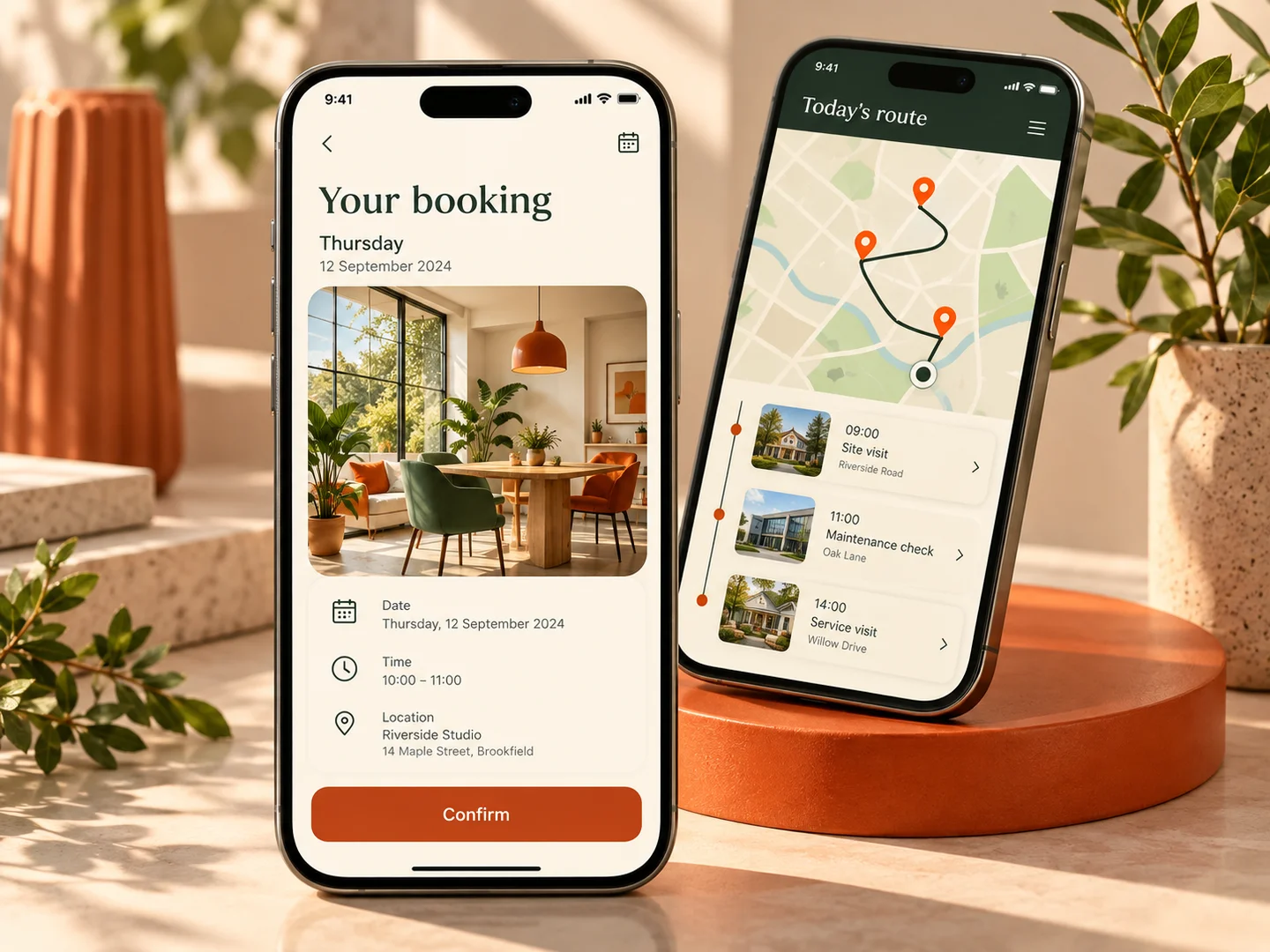
Illustrative customer booking and field-team route apps displayed on two phones.
Illustrative app concepts.
One shared care system

Fixed monthly care.
Clear scope.

Choose a plan for one existing mobile product. Native and hybrid apps are welcome, including iOS and Android. We confirm your technology, code and release setup before accepting the app. Your monthly price is fixed for the agreed scope.

Prices in USD. IP Geolocation by DB-IP.

Compare monthly care.

App Care and App Care Plus at a glance
Monthly careApp CareCare Plus
Monthly price$450 USD$1,100 USD
Small changes & fixesUp to 10 acceptedUp to 20 accepted
Extra micro-features1 per month2 per month
Personal coordinationAgreed request channelAssigned manager & monthly call
Progress updatesWeeklyWeekly

Both plans: one active item, agreed testing and a weekly release opportunity for tested work you approve. Plus adds capacity and a personal point of contact; it does not add a guaranteed repair deadline.

For steady upkeep and small upgrades

App Care

$450 USD / month

Keep your app current with regular fixes, small changes and a useful micro-feature each month.

See included care
  • Up to 10 accepted small changes and fixes per month
  • 1 micro-feature upgrade per month, additional to your changes allowance
  • Weekly progress updates and a weekly release opportunity for tested, approved changes
  • Monthly maintenance review and agreed testing
  • An agreed request channel for your priorities
  • A monthly summary of work and next priorities

One product. One agreed queue. One task active at a time.

Discuss App Care — free

Monthly in advance. One-month minimum. Cancel with 30 days’ notice; service ends at the end of the paid monthly period that falls at least 30 days after notice. No annual commitment.

Examples of a small change or micro-feature

What could your changes allowance cover?

Illustrative scopes, subject to review of your app.

App Care · 1 task

A contained sign-in fix

Fix a reproducible validation error in one existing screen, in one shared codebase, against one agreed acceptance check.

Either plan · 1 change

A small screen improvement

Adjust text and layout within one agreed change to an existing screen. A new screen or redesigned journey needs a separate quote.

Separate fixed quote

A new payment integration

A new payment provider, major backend change or app recovery is a separately agreed project, rather than one maintenance task.

Plus a micro-feature: add a filter, display toggle or sort option to an existing workflow using existing data. App Care includes one per month; Care Plus includes two, additional to the changes and fixes allowance.

Two native apps? The same fix in separate iOS and Android codebases uses two tasks. A contained shared-codebase change uses one, with agreed supported-platform testing included.

What counts as a task?
Task scope
One contained changeA task is one contained change to one existing screen or function in one codebase, with one agreed acceptance criterion. On either plan, examples include fixing a reproducible validation error, updating an isolated compatible dependency or adjusting an existing screen’s layout or text.
Native and shared codebasesThe same change in separate native iOS and Android codebases counts as two tasks. A shared-codebase change counts as one task when it fits the same boundary; supported-platform testing is included in that task.
Accepted after reviewWe reproduce or review the request before accepting it into the care queue. Investigation may show that a separate project is needed. A task slot is not an unlimited repair obligation.
Maintenance and improvementsBoth plans cover maintenance and small changes to existing functionality, within the same contained-change boundary. New screens, substantial features, integrations, redesigns, major framework/OS migrations, architecture changes and substantial backend changes need a separate fixed quote.
Micro-feature upgradesA micro-feature is one small new capability within an existing screen or workflow, using existing data and services, with one agreed acceptance criterion. Examples include a filter on an existing list, a display toggle or a sort option. App Care includes 1 per month; Care Plus includes 2. These are additional to the 10 or 20 small changes and fixes, not deducted from them. Agree the supported platforms and acceptance check before work starts; one agreed micro-feature across those platforms uses one micro-feature allowance. New screens, new integrations and substantial backend work need a separate quote.
Monthly limitsOne task is active at a time. Unused monthly task slots do not roll over. Accepted tasks remain in the queue until completion without using another task slot; timing depends on scope, access and approvals. Micro-features use the same prioritised queue, with one change or micro-feature active at a time. Unused micro-feature allowances also expire; accepted unfinished micro-features carry forward without using another feature allowance. Extra work requires an approved fixed quote before it begins; no hourly overage is automatically added.
Review and releaseTesting covers accepted changes against the agreed device and OS list. Both plans include a weekly progress update and a weekly release opportunity: preparation and submission to the agreed stores when tested changes are ready and you approve them. If no change is ready, the progress update explains the status and next steps. Weekly updates do not guarantee a new store version every week; store decisions and review times remain with Apple and Google.
Starting costs and a cancellation example

Two separate decisions. No automatic subscription.

If an assessment is followed by approved care, budget for the $500 one-off assessment, then $450 for the first month of App Care or $1,100 for Care Plus. The assessment and monthly care are separate purchases. You can stop after receiving the assessment.

Taxes, third-party fees and separately quoted repairs are additional where applicable. Monthly care starts only after technical acceptance and an agreed start date.

How 30 days’ notice works

Example: your paid months run from the 1st to the last day of each month. You give notice on 10 November. Thirty days takes you to 10 December, so care ends on 31 December, at the end of that paid period. The December payment is still due. A one-month minimum does not mean you can give notice at any point and stop at the end of that first month.

From a request to a release

A clear queue. Reviewable changes.

  1. 01 · Agree accessYou retain account ownership. Confirm repository, store and connected-service permissions through the agreed access process.
  2. 02 · Accept a ticketReview the issue, affected codebase and platforms. Agree the task boundary, estimate and acceptance check before work starts.
  3. 03 · Implement & reviewOne item is active at a time. Agree the code-review and handover route with your team; Care Plus includes a manager to coordinate priorities and updates.
  4. 04 · Check the changeTest against the agreed device/OS list and acceptance check. Confirm relevant connected-system checks and release/rollback arrangements.
  5. 05 · Approve & releaseYou approve the release. Each week, review progress, blockers and tested work ready for submission; store review remains with Apple or Google.
See how an example queue moves

Illustrative queue, not a completion promise.

  1. A reproducible sign-in validation bug: agree one acceptance check, then fix, test and request approval.
  2. A copy change waits while the first item is active. A list-filter micro-feature follows in the same queue, using its separate feature allowance.
  3. If signing access blocks a release, the weekly update records the blocker and next action. It does not count as a completed store release.

Accepted unfinished items carry forward without using another slot. Unused allowances expire. An allowance counts accepted work; it is not a guarantee that every slot will be completed within that month.

Know your next step

App Audit

$500 USD once

Written findings.
No obligation to buy ongoing care.

Built your app. Ready to launch? Get a written review before app-store submission or ongoing maintenance. For one mobile app with up to two accessible codebases. AI-built mobile apps are welcome.

  • Build findings: access/dependency inventory and a build attempt per codebase.
  • Key user flows: bounded checks agreed around what your app should do.
  • Readiness notes: completeness, review access and available crash/store evidence.
  • Written priorities: what to address next, with limits and unverified areas stated.

One-off review. No subscription starts. Scope and report date agreed once access is ready.

Is my app eligible?

A public store listing is not required for a pre-launch audit. Arrange source/build and test access through our agreed secure onboarding process; for published apps, include relevant store access and available reports. Do not send passwords, API keys or customer data in an enquiry. Ask before paying if you have a web-only prototype, cannot export source from a builder, need specialist regulated-app checks, or have more than two mobile codebases.

What is outside the audit?

The price covers the written review. Repairs, redesign, store submission, unlimited retesting, major recovery, comprehensive security testing and legal/privacy certification are excluded. Apple and Google decide store approval. There is no guarantee of approval and no obligation to buy ongoing care.

Preview a sample auditIllustrative example

Fictional app and findings. This shows the kind of written output included, not a client result or a promise about your app.

Sample priority report

A booking app with an unclear handover

One shared mobile codebase · iOS and Android · example scope

01 · Access & dependencies
Source repository identified. Store access still needs owner approval. Dependency versions recorded for review.
02 · Build attempt
Build blocked by missing signing configuration. Next action: arrange the signing access needed for another attempt.
03 · Available notices
Crash reports and store notices were not accessible in this example. Store-owner approval is needed before those findings can be reviewed.
04 · Written priorities
First: resolve signing access. Next: reproduce the reported booking error. Separate: quote any required payment-provider migration.
05 · Care recommendation
Confirm build readiness before monthly care. The reported booking error needs reproduction and scope review; any payment-provider migration requires a separate quote.

Your assessment covers your app’s available evidence. Repairs, migrations and a comprehensive security audit are not included.

Not sure what a codebase is?

It is a set of source files used to build an app. One shared set can serve iOS and Android; separate native apps usually have separate sets. Send your public app link or describe your pre-launch app if you are unsure.

Ask about my app — free

Before paying: confirm eligibility and the access you can arrange. See the assessment reschedule and refund assurance. If access is missing or your app needs specialist recovery, ask for a separate scope first.

Ask about App Audit — free

Need recovery
or a major change?

An app that will not build, has substantial inherited issues or needs a major new feature may need a separate project first. We agree that scope before starting ongoing care. Rebuilds, major migrations and new integrations are not automatically covered by a maintenance plan.

Care prices are in USD per month. Monthly billing starts after the app is accepted and the start date is agreed. Applicable taxes and third-party fees are identified separately in your proposal. Sending an enquiry does not start a subscription or authorise paid work. Store accounts, hosting, software subscriptions and third-party usage charges are separate. Both plans include scoped small improvements and their stated micro-feature allowance; neither includes advertising, customer acquisition or a revenue guarantee.

Scope, billing and responsibilities
Clear responsibilities before care begins.
Technical acceptanceNative iOS, native Android and hybrid apps can be considered. We confirm source access, build and release readiness, supported platforms, dependencies and existing issues before accepting ongoing care.
Support and urgencyOne nominated contact and an agreed request channel. Support windows: Monday–Friday, 9am–6pm UK time and 9am–6pm US Eastern time. Urgent issues from existing care clients are acknowledged within 2 support hours through the agreed channel; outside these windows, requests enter the next support window. Your proposal confirms severity rules and escalation. Acknowledgement is not a repair deadline; no 24/7 cover or guaranteed resolution time is included. New visitors should use the free fit enquiry.
Billing and cancellationMonthly in advance, with a one-month minimum. Cancel with 30 days’ notice; service ends at the end of the paid monthly period that falls at least 30 days after notice. No annual commitment.
Connected systemsBackend work, hosting, monitoring and security maintenance are included only where explicitly scoped. Your proposal identifies who owns each connected service and who handles issues outside the mobile app.
Care Plus account managerYour personal account manager is assigned at onboarding and is your named contact for priorities, weekly progress, approvals and escalations. A monthly planning call is included. This is coordination and continuity, not a dedicated full-time developer or 24/7 incident cover.
Customer responsibilitiesYou keep ownership of your accounts, arrange approved access and nominate someone to prioritise work, provide safe test cases and approve releases. Do not send credentials, source code or customer records through this form.
A short message is enough

Your app.
Your next step.

Tell us the issue. We aim to reply in 1–2 hours during support hours to discuss fit, any assessment needed and the next step.

01Start with what you know.02Agree the scope before paid work.03Keep ownership of your app.
Chat on WhatsApp
START HERE

Tell us what needs attention.

Free enquiry. No payment or subscription starts here.

A sentence is enough. No passwords, source code or customer data.

Add your name or app details (optional)

Free enquiry. We use these details to respond to your enquiry. No newsletter subscription. Privacy policy.

See an illustrative maintenance scenario
See how scope becomes work

When a booking journey needs attention.

An illustrative case study: a small business needs to separate a mobile booking fault from the calendar and payment services behind it.

Illustrative case study — fictional, not a client result. No customer review, measured outcome or completed engagement is claimed.

01

The brief

A customer sees an incorrect validation message while booking. Staff need to know whether the issue is in the app or a connected service.

02

A possible scope

Map the affected step and its system owner. A contained app-screen validation fix may fit one task after review; test it with representative safe booking examples.

03

The acceptance check

Agree the expected screen behaviour and test the accepted change. The nominated business owner approves the release when the agreed check passes.

Where the boundary sits

Calendar availability, payment failures, hosting and backend changes need explicit scope. A mobile maintenance plan does not automatically cover every connected system.

Agree the handover

Before care begins, identify who owns the app, calendar, payment service, backend and hosting, and the agreed route for an urgent incident.

See an illustrative monthly work summary

Sample only, not delivered client work or a completion promise.

App Care · 10 changes + 1 micro-feature

An illustrative shared-codebase queue could contain four reproducible bug fixes, three small text or layout changes and three isolated compatible dependency updates. A new filter on an existing list could use the separate micro-feature allowance. Each item needs an agreed scope and acceptance check.

Care Plus · 20 changes + 2 micro-features

A busier illustrative queue could contain eight bug fixes, eight existing-screen changes and four compatible dependency updates. Two separate micro-features might add a sort option and a display toggle using existing data. Your assigned account manager coordinates priorities, weekly updates and the monthly planning call.

Weekly progress updates show work completed, blockers and next steps; the monthly summary records accepted changes and micro-features, agreed checks and release status. One item is active at a time. Tested, approved changes can use the weekly release opportunity; store timing is outside our control. These are example allocations, not a guarantee every item completes that month. Accepted unfinished work carries forward without another slot in its category. Unused allowances expire, so agree new priorities around carryover.

Tell us about a similar issue — free enquiry
Check whether your app fits
Check the fit

A maintenance plan
with a business owner.

The right care arrangement brings technical work and business decisions together. Nominate someone who can explain priorities and approve the outcome.

A sensible fit for ongoing care

  • An existing customer or staff app supports a defined business process.
  • You can arrange source access and an owner for app, store and connected-service accounts.
  • Someone in your team can prioritise issues, supply safe test cases and approve releases.

A different starting point may help

  • High-risk, regulated or safety-critical operations need specialist requirements reviewed before any support commitment.
  • A new business workflow, major integration or platform migration may need a separate project.
  • An immediate outage or a round-the-clock support requirement needs a separately agreed incident arrangement.
Before you decide

Your app.
Your questions.

Can you audit my AI-built app before launch?

Yes, for an inspectable iOS or Android mobile app with accessible source/build and test access, within the agreed scope. A public store listing is not required. We agree the important user flows and checks before work begins, then deliver written findings and priorities. A web-only or locked builder prototype may need a different scope. App Audit does not include repairs, store submission or a guarantee of Apple or Google approval.

How soon will I hear from you?

We aim to reply to enquiries in 1–2 hours during support hours. Support windows are Monday–Friday, 9am–6pm UK time and 9am–6pm US Eastern time. Existing care clients receive urgent-issue acknowledgement within 2 support hours through their agreed channel. Outside those windows, requests enter the next support window. Assessment target: 24–48 hours once access is ready, with an agreed report delivery date. These are not repair deadlines; no 24/7 cover is included.

Does app care include our backend and hosting?

Only where the proposal expressly includes them. We identify relevant services and responsibilities before starting. Supplier subscriptions, hosting charges and substantial backend changes are separate unless agreed otherwise.

Can you guarantee uninterrupted service?

No. A maintenance plan does not guarantee uninterrupted availability or control the services your app depends on. Required response arrangements and contingency responsibilities need to be agreed for your situation.

What if we need urgent or out-of-hours support?

Existing care clients should use the agreed support channel and flag urgency. We acknowledge urgent issues within 2 support hours during Monday–Friday, 9am–6pm UK time and 9am–6pm US Eastern time. Outside these windows, requests enter the next support window. Triage identifies the next action; repairs depend on scope, access and approval. Recovery beyond the agreed plan is separately quoted. Round-the-clock incident response is not included.

Who approves updates?

Your agreement identifies the approver and the test and release process. App-store decisions and review times remain with Apple and Google.

What if the app handles sensitive or regulated information?

Describe the category of information, without sending actual records. Suitability, access controls and any specialist requirements need review before work is accepted. No compliance certification is implied.

What do weekly updates include?

A weekly progress update covers completed work, blockers and next steps. There is also a weekly release opportunity for tested changes that you approve. If nothing is ready, we report the status rather than publish an unnecessary update. Apple and Google control store review times, so a new store version every week is not guaranteed.

What does the Care Plus account manager do?

Your personal account manager is assigned at onboarding. They coordinate your priorities, weekly progress updates, approvals and escalations, and hold a monthly planning call with you. Your team keeps product and release decisions. This is not a dedicated full-time developer or 24/7 support.

A useful first step

Which workflow needs a clearer plan?

Share the app, its main business use and any support requirement. We will discuss the scope before recommending care.

What happens next

Our team aims to follow up by email in 1–2 hours during support hours. We clarify the app’s condition, access and priorities, then agree any assessment and the right next step. You see the scope and costs before paid work starts.

Prefer email? team@afinitiglobal.com

Discuss my app — free